
From the Desk of Felix
“Colorado isn’t just a place you visit in the summer. It’s a place that reminds you why people fall in love with living here.”
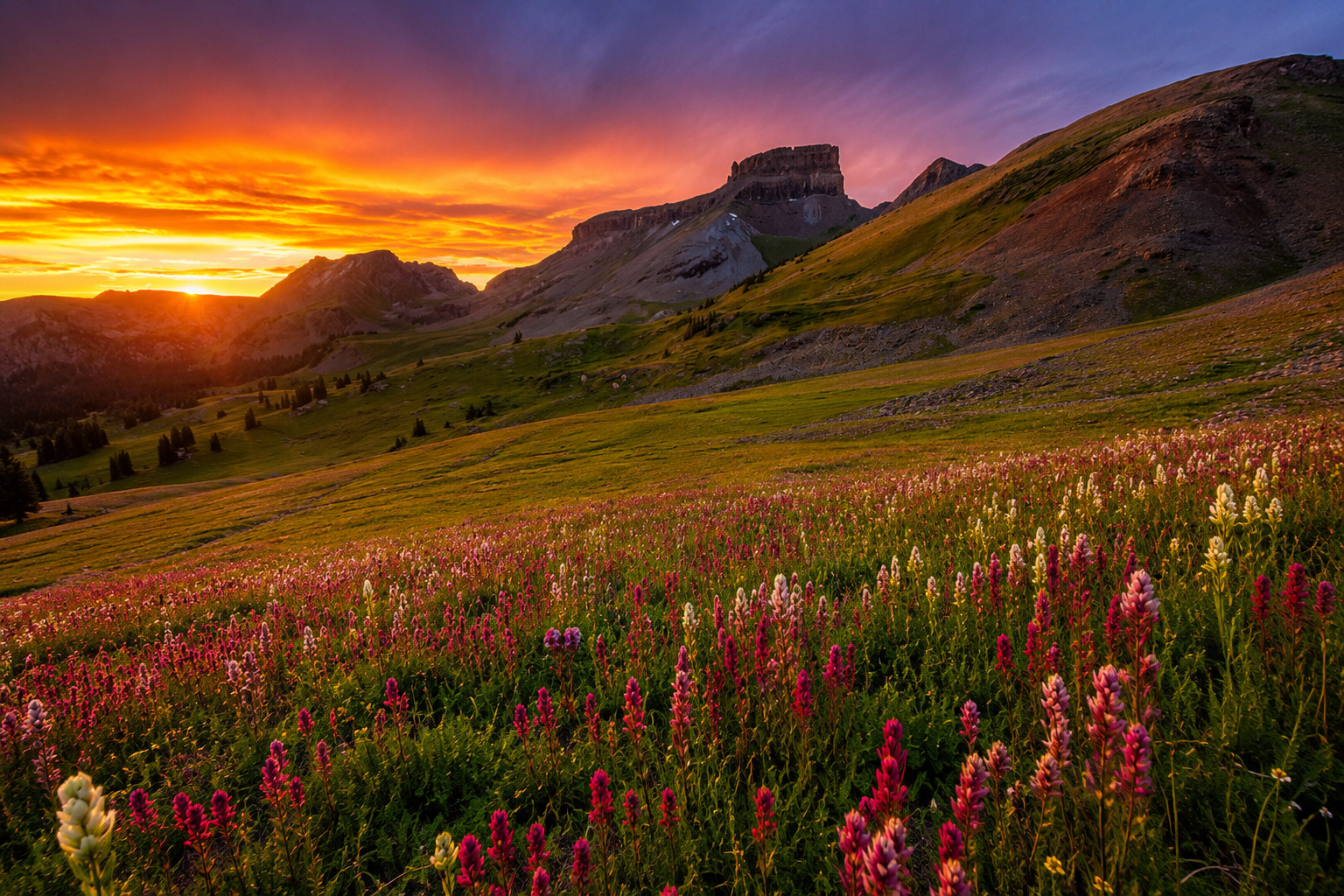
There’s a particular kind of light that shows up in Colorado in July. It arrives early, around 5:30 in the morning, and it’s the kind that makes even a gas station coffee run feel like a scene from a film. By nine, the trails are full. By noon, the sky is doing something dramatic. By seven, someone somewhere is watching a band play under 300-foot sandstone monoliths while the sun sets pink over the Front Range.
Colorado Summer 2026 is peaking right now, and July is arguably the single best window to experience it. Colorado Wildflower Season hits its stride, the Colorado Monsoon rolls in on schedule every afternoon, and Red Rocks Concerts stack up almost nightly.
This guide is built for three kinds of readers: the person who lives here and wants to make the most of the season, the visitor planning the best things to do in Colorado in July, and the person quietly wondering what it would be like to live this lifestyle year-round.
Wildflower Season
High-country blooms peak in mid-to-late July. Top hikes near Denver include Lake Isabelle, the Fourth of July Trailhead, and Herman Gulch.
Monsoon Season
Sunny mornings, storms by early afternoon. Hike early, come down by noon — and always keep an eye on the sky above treeline.
Colorado Wildflower Season 2026
Every June and July, something happens in the high country that stops hikers mid-stride: the alpine meadows go from brown-and-green to an explosion of purple, red, yellow, and white, seemingly overnight. This is Colorado Wildflower Season, one of the best free shows in the American West.
Timing depends entirely on elevation. Up where the postcard meadows live — 9,500 feet and higher — winter doesn’t let go until June, so flowers get a brief window to bloom, set seed, and prepare for the next winter. A heavy snowpack pushes bloom later into July; a light winter brings blooms forward but tends to mean a shorter season.
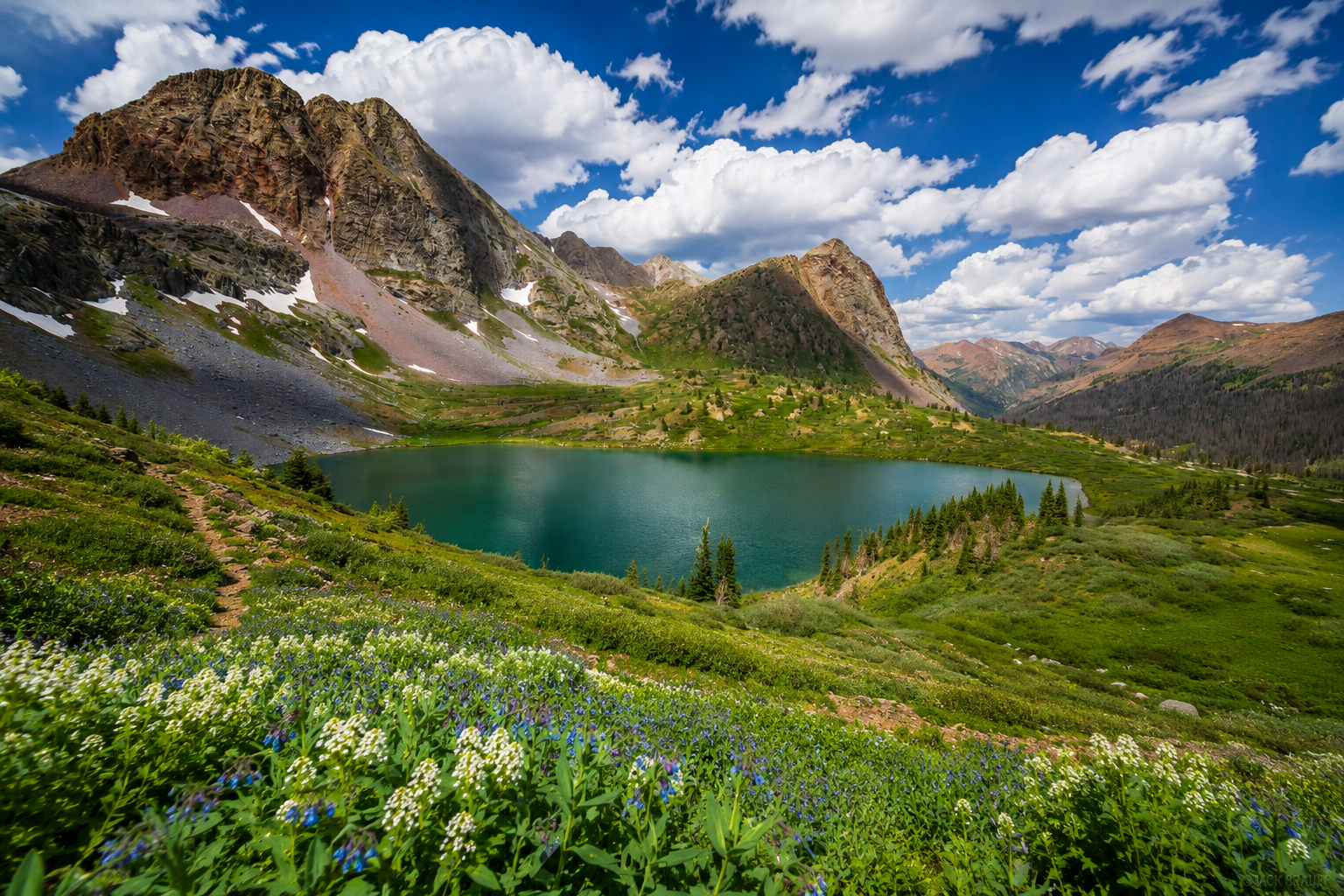
Colorado’s high meadows run a color wheel that includes the Colorado columbine (the official state flower, protected by law since 1925, with picking capped at 25 stems per person per day), Indian paintbrush, purple lupine and larkspur, golden banner, and elephant’s head. The simplest rule for hikers: stay on the trail, don’t trample the meadow for a photo, and leave every flower for the next person.
Best Wildflower Hikes Near Denver
Lake Isabelle — Brainard Lake
The single most reliable wildflower hike near the city, climbing past Long Lake through the Indian Peaks Wilderness. Best mid-July. A timed-entry reservation is required for vehicle access during the operating season; check the current Brainard Lake requirements before leaving.
Fourth of July Trailhead — Nederland
Named for exactly the reason you’d guess: peak bloom right around Independence Day, with bluebells and columbine on the climb toward Diamond Lake. A higher-clearance vehicle helps on the rough access road.
Herman Gulch — I-70
One of the most photogenic hikes reachable straight off the interstate, opening into a massive alpine basin carpeted in columbine, paintbrush, and lupine. Best late June through July.
Butler Gulch — Berthoud Pass
Shade for the first half, open wildflower-dense alpine terrain above treeline for the second. More than 100 documented wildflower species have been counted in this one drainage.
Mount Falcon Park — Morrison
The pick for families or anyone who wants a wildflower fix without a long drive. It also sits minutes from Red Rocks Amphitheatre, pairing naturally with a concert night.
Crested Butte — Wildflower Capital
Worth the drive at least once in a lifetime. The Gunnison Valley grows more than a thousand documented wildflower species, timed with the Wildflower Festival’s 40th edition, July 10–19, 2026.
Golden Gate Canyon State Park
Shady forest, panoramic views of snow-capped peaks, and meadows dotted with wildflowers along meltwater creeks. A great, less-crowded alternative to the Front Range’s more famous trailheads.
Chautauqua Park — Boulder
Set right at the base of the Flatirons, this is the easiest wildflower walk on the list, dog-friendly and doable as a quick outing rather than a full hiking day. Best in June.
Roxborough State Park
Sits in a genuine transition zone where the plains rise into the foothills, hosting a wide mix of species — larkspur, golden banner, scarlet paintbrush — often earlier in the season, from May through June.
American Basin & Yankee Boy Basin
Near Lake City and Ouray, these San Juan Mountain basins are where the truly serious wildflower photographers go — columbine fields set against some of the state’s most dramatic peaks. Best mid-July.
Colorado Monsoon Season Explained
If you’ve spent any July afternoon in Colorado, you already know the pattern, even if you didn’t know it had a name: crystal-clear blue sky in the morning, building clouds by late morning, and by 1 or 2 p.m., thunder rolling across the Front Range like clockwork. This is the Colorado Monsoon, and understanding it will make you a smarter, safer, and honestly happier person to be around a Colorado trailhead.
The North American Monsoon pulls moisture up from the Gulf of California and the Gulf of Mexico into the interior Southwest and southern Rockies, typically starting in late June or early July and running into September. As that moist air hits Colorado’s mountains, it gets forced upward, cools, and condenses into towering cumulus clouds by early-to-mid afternoon.
Above treeline, there is nowhere to hide from lightning. That’s why experienced Colorado hikers are famous for absurdly early start times — many fourteener attempts begin between 3 and 5 a.m. so hikers can summit and descend below treeline before the storm window opens. The National Weather Service’s guidance is blunt: if you can hear thunder, you’re already close enough to be struck. Review the National Weather Service’s backcountry lightning guidance before any exposed hike.
300+ days of sunshine.
One very predictable exception.
Denver receives more than 300 days of sunshine a year — more than Miami or San Diego — which is exactly why the state’s afternoon storm pattern feels so dramatic by contrast. It’s not that Colorado is a rainy place. It’s that when it does rain in summer, it tends to happen on an almost predictable daily schedule.
The monsoon isn’t only a hazard to plan around. Late-afternoon storms clearing over the peaks routinely produce full rainbows against the Front Range, and monsoon moisture keeps alpine meadows green and blooming later into the summer.
20 Fascinating Facts About Colorado
300+ Days of Sunshine a Year
Colorado’s high elevation and dry climate mean the sun appears more often than in famously sunny cities like Miami.
Home to 58 Fourteeners
Fifty-eight mountains rise above 14,000 feet, more than any U.S. state except Alaska. Mount Elbert, at 14,440 feet, is the tallest.
Denver Really Is the Mile High City
The 13th step of the Colorado State Capitol is marked at exactly 5,280 feet above sea level — one mile, on the nose.
The Centennial State
Colorado joined the Union on August 1, 1876, weeks after the country’s 100th birthday — a nickname that carries extra weight as the country marks its 250th in 2026.
The State Flower Is Protected by Law
The Colorado columbine has been the state flower since 1899; a 1925 law caps picking at 25 stems per day on public land.
A World-Class Dinosaur Discovery Site
Fossil beds including Dinosaur Ridge near Morrison — just down the road from Red Rocks — have yielded major stegosaurus and apatosaurus finds.
Red Rocks Formed Over 300 Million Years
Ship Rock and Creation Rock were deposited as sediment over roughly 300 million years, later tilted upright by the same forces that pushed up the Rockies.
Rocky Mountain National Park Spans Two Ecosystems
More than 400 square miles include dense subalpine forest and vast alpine tundra above 11,000 feet.
Aspen Groves Are Technically Single Organisms
Most aspen stands are clonal colonies sharing one root system — an entire hillside can genetically be one organism.
Mount Blue Sky’s Record-Setting Road
The scenic byway to the 14,130-foot summit is the highest paved road in North America.
More Craft Breweries Per Capita
Colorado consistently ranks among national leaders for craft breweries per capita, with Denver alone home to dozens of taprooms.
Mining Built the Mountain Towns
Idaho Springs, Central City, and Cripple Creek were built almost overnight during the gold and silver rushes of the 1850s–1890s.
Home to Olympic & Paralympic Training
Colorado Springs’ high altitude makes it a favored environment for elite endurance athletes.
Some of the Best Night Skies in the Country
Parts of the San Juan Mountains and high desert are certified International Dark Sky places.
An Enormous Ski Industry — and Bigger Summer Season
Vail, Breckenridge, Steamboat, and Winter Park run just as active a summer season, with mountain biking and wildflower hikes replacing the lift lines.
Colorado Invented More Than You’d Think
Cheeseburgers, rooftop apres-ski hot tub culture, and the tech behind the first color television broadcast all have credible Colorado origin stories.
Home to Four National Parks
Rocky Mountain, Mesa Verde, Great Sand Dunes, and Black Canyon of the Gunnison span alpine tundra to 750-foot sand dunes.
A Genuine Three-Way Geographic Split
High plains in the east, the Rockies through the middle, and the Colorado Plateau’s canyon country in the west.
Elevation Changes How You Cook — and Drink
At a mile above sea level, water boils at a lower temperature and alcohol affects the body faster.
Wildlife Roams Right Up to the Suburbs
Moose, black bears, mountain lions, and elk are regular sightings in foothill neighborhoods along the Front Range.
August at Red Rocks Amphitheatre
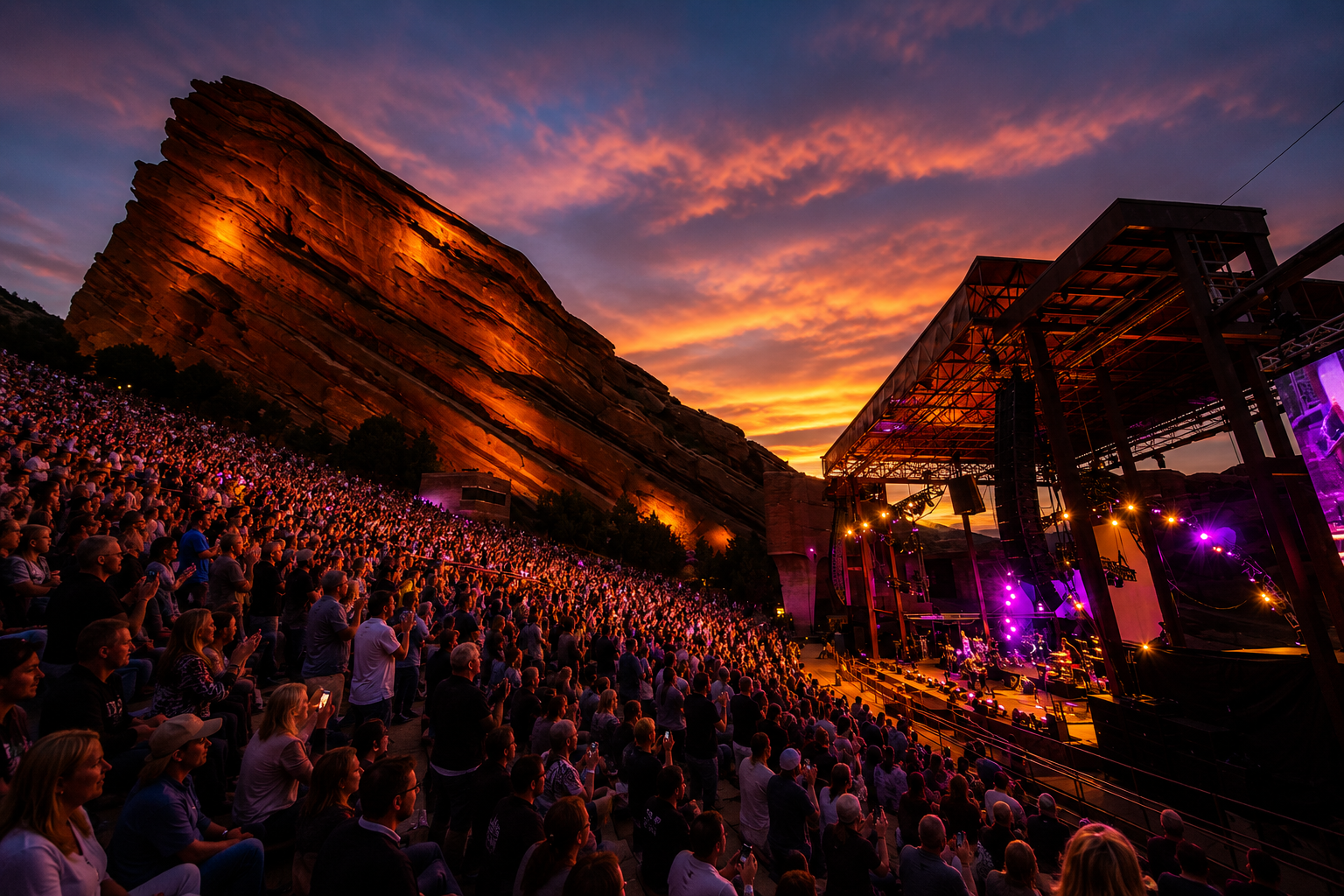
There’s a reason Red Rocks Amphitheatre shows up on nearly every “best concert venues in the world” list ever written, and it isn’t marketing. It’s geology. The two towering sandstone walls that frame the stage — Ship Rock and Creation Rock — were tilted into their dramatic near-vertical position by the same tectonic uplift that formed the Rockies, creating a natural amphitheater with acoustics engineers still marvel at.
Built by the Civilian Conservation Corps and opened in 1941, the venue has hosted The Beatles’ only stop in Colorado, John Denver, Stevie Wonder, and U2’s famous “Under a Blood Red Sky” film shoot. Ask any touring musician who’s played it and you’ll hear the same answer: it’s not a room, it’s a landscape.
Schedule update: These are selected August 2026 highlights, checked July 11, 2026. Lineups and dates can change; confirm every show with the official Red Rocks calendar.
| Date | Artist |
|---|---|
| Aug 1 | Tedeschi Trucks Band |
| Aug 2 | Wynonna Judd & Melissa Etheridge, with the Colorado Symphony |
| Aug 4–5 | K-LOVE Live |
| Aug 6 | Of Monsters and Men |
| Aug 7 | beabadoobee |
| Aug 8 | Slightly Stoopid |
| Aug 9 | Motionless In White |
| Aug 11 | Empire of the Sun |
| Aug 12 | Sierra Ferrell |
| Aug 13–14 | Mt. Joy |
| Aug 15–16 | LCD Soundsystem, with Feist and Victoryland |
| Aug 17 | Train, with Barenaked Ladies |
| Aug 18 | Nathaniel Rateliff, with the Colorado Symphony |
| Aug 19 | Illenium |
| Aug 20 | Tori Amos |
| Aug 21 | Grupo Frontera |
| Aug 22 | Reggae on the Rocks — Rebelution, MAOLI, Skip Marley, Third World, Etana, Judge Roughneck |
| Aug 23 | Joe Bonamassa |
| Aug 24 | Santana |
| Aug 25 | Ian Munsick, with ERNEST and Ned LeDoux |
| Aug 26 | Ray LaMontagne, with the Weather Station |
| Aug 27–28 | Goose |
| Aug 29 | Bryson Tiller |
| Aug 30 | Ty Myers |
| Aug 31 | John Fogerty, with Hearty Har |
Tips for Your First Red Rocks Concert
Parking & Arrival
Parking is free but fills fast for the biggest shows — arrive at least 90 minutes before doors, or plan on a shuttle. Gates typically open about two hours before showtime.
Weather
Evening storms are less common than afternoon ones, but Red Rocks sits exposed to the sky with no roof. Check the forecast and bring a light rain layer; shows are almost always rain-or-shine.
What to Bring
A light jacket — temperatures drop fast once the sun sets, even in August — a reusable water bottle, and comfortable shoes for the stairs carved into the hillside.
Worth Building a Night Around
Reggae on the Rocks (Aug 22) always sells out. Nathaniel Rateliff with the Colorado Symphony (Aug 18) pairs a hometown favorite with an orchestral treatment. Santana (Aug 24) is about as fitting a pairing as concert booking gets.
Why Summer Is One of the Best Times to Fall in Love with Colorado
There’s a version of Colorado summer that lives entirely outside of trailheads and concert venues, and it’s just as much a part of the Colorado lifestyle as the fourteeners. It’s the Saturday morning farmers markets in nearly every neighborhood, patio dining season stretching from May through September, and mountain towns just an hour or two away that shift from ski destinations into hiking-and-lake-day destinations without missing a beat.
It’s paddleboarding on Cherry Creek Reservoir on a weeknight because the sun doesn’t set until nearly 8:30. None of this is manufactured for tourists — it’s genuinely how residents spend their summer, which is exactly why so many people who visit Colorado for a week in July end up, a year or two later, quietly Googling Moving to Colorado at 11 p.m.
Why People Choose to Call Denver Home
A Diverse, Growing Economy
Denver has built a genuinely diverse economy over the past two decades, with strong job growth across technology, aerospace, healthcare, and renewable energy. Most Front Range residents can be on a mountain trail within 30 to 45 minutes of leaving their driveway.
Unmatched Access & Character
Neighborhoods from Washington Park’s historic charm to the walkable energy of LoHi, a nationally recognized food and brewery scene, professional sports across every major league, and genuine, drivable access to skiing and alpine lakes make Living in Denver one of the most searched relocation terms every spring and summer.
Frequently Asked Questions
When is peak wildflower season in Colorado?
Peak bloom generally runs from late June through late July, depending on elevation — lower elevations bloom earlier, high alpine meadows peak in mid-to-late July.
Why does it rain every afternoon in Colorado in the summer?
The North American Monsoon pushes moisture into Colorado from roughly late June through September, combining with daytime heating to reliably produce afternoon thunderstorms, especially in the mountains.
What is the best wildflower hike near Denver?
Lake Isabelle at Brainard Lake Recreation Area is widely considered the most reliable and accessible wildflower hike within about 90 minutes of Denver.
Is it safe to hike in Colorado during monsoon season?
Yes, as long as you start early and are off exposed ridgelines and summits before early afternoon, when storms typically build. Lightning above treeline is genuinely dangerous.
What concerts are at Red Rocks in August 2026?
Selected August 2026 highlights include Tedeschi Trucks Band, Santana, Goose, John Fogerty, LCD Soundsystem, and Reggae on the Rocks. Confirm dates and the complete lineup through the official calendar before making plans.
Do I need a reservation to hike at Brainard Lake?
During peak summer, yes — a timed-entry vehicle reservation is typically required through Recreation.gov.
What is Colorado’s state flower?
The Colorado columbine, protected by state law since 1925, with picking limited to 25 stems per person per day on public land.
How many fourteeners does Colorado have?
Fifty-eight mountains in Colorado rise above 14,000 feet in elevation.
Is July a good time to consider moving to Colorado?
Many people find summer the most persuasive season to experience the Colorado lifestyle firsthand, though it’s worth exploring the state across multiple seasons before making a decision.
What is the best time to visit Colorado overall?
July offers the best combination of wildflowers, warm weather, and events, though September offers similar weather with fewer crowds and the start of fall color.
Sources & Updates
- Outdoor conditions, access rules, and event schedules can change; verify time-sensitive details before making plans.
- Brainard Lake timed-entry information — official vehicle-access and reservation guidance.
- National Weather Service lightning safety guidance — planning advice for exposed mountain terrain.
- Red Rocks Amphitheatre event calendar — official schedule and ticket information.
This is the month it clicks
for people, every single year.
What I’ve noticed, every single July, is that this is the month it clicks. There’s something about standing in a wildflower meadow at 10,000 feet on a Tuesday morning, or watching a storm roll across the peaks from a rooftop patio, that makes the decision feel less like a spreadsheet and more like a fairly obvious next step.
Colorado doesn’t need to be oversold. It just needs the right introduction — and honestly, summer is the best one there is. Whether you’re a longtime resident finally ready to make a move, or still in the early stages of figuring out if this state is for you, I’d genuinely love to be part of that conversation. No pressure, no pitch — just a real conversation about what you’re looking for.
Thinking about buying or selling in Colorado?
Let’s grab a coffee and have a real conversation about your goals.

felix.luck@compass.com
